About the Book
AMD Insight: A Metabolic Lens on Macular Degeneration by Elliott English
A groundbreaking framework for understanding age-related macular degeneration as a metabolic and vascular condition. The book examines why drusen—the deposits that destroy vision in AMD—share the same molecular fingerprint as arterial plaques, and what this means for prevention and treatment.
Grounded in peer-reviewed research but largely ignored by conventional ophthalmology, this book presents practical, evidence-based interventions organized by strength of evidence—from robust clinical trials to emerging research.
Cover Image
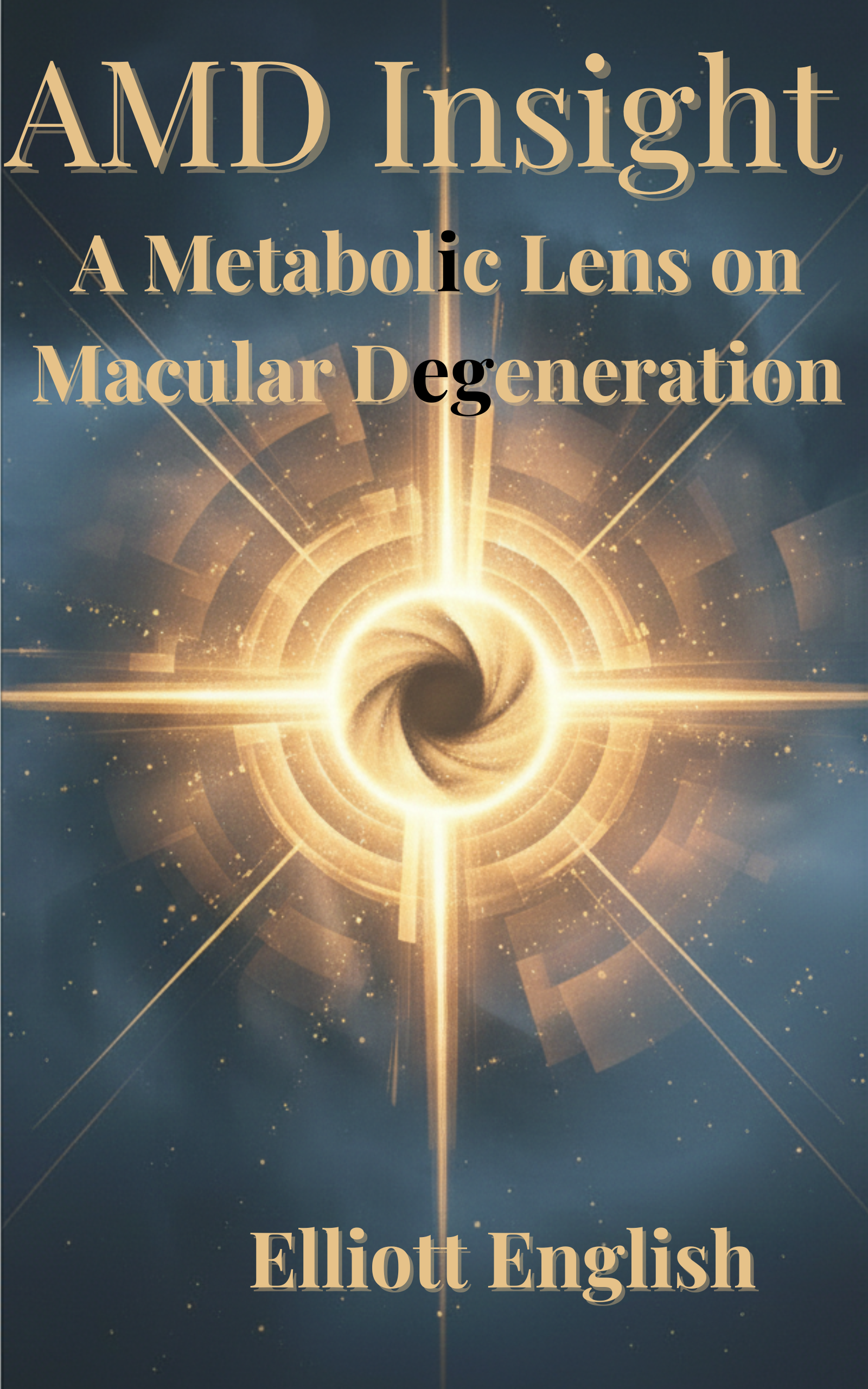
High-resolution cover image for use in articles, show notes, and social media.
Download Cover ImageAuthor Bio
Short Bio
Elliott English is the author of AMD Insight: A Metabolic Lens on Macular Degeneration, a research synthesis examining age-related macular degeneration through a metabolic and vascular framework. The book was born from a personal refusal to accept "watch and wait" as the only response to a loved one's diagnosis.
Long Bio
Elliott English is the author of AMD Insight: A Metabolic Lens on Macular Degeneration, a comprehensive research synthesis that challenges the conventional understanding of age-related macular degeneration.
When someone close to him was diagnosed with AMD, English found the standard medical response—"watch and wait"—unacceptable. What followed was an intensive investigation into the peer-reviewed literature, uncovering a metabolic and vascular framework that mainstream ophthalmology has largely overlooked: the same lipids, cholesterol, and inflammatory proteins found in arterial plaques also appear in the retinal deposits that drive AMD.
AMD Insight presents this framework alongside practical, evidence-based interventions—from photobiomodulation and AREDS2 supplementation to breathing techniques and dietary strategies—organized by strength of evidence for readers to explore with their doctors.
Key Talking Points
- The drusen-plaque parallel: The deposits that destroy vision in AMD share the same molecular signature as the plaques that cause heart attacks. If we understand cardiovascular disease as metabolic, why not AMD?
- The metabolic cascade: The retina is the most metabolically demanding tissue in the human body. When its oxygen and energy supply is compromised, degeneration follows a predictable pattern.
- The CO₂ connection: Carbon dioxide plays a critical role in retinal blood flow through the Bohr effect. Breathing patterns directly influence how much oxygen reaches the eye.
- The light mismatch: Modern diets stripped of protective carotenoids, combined with constant blue-light exposure from screens and LEDs, create the perfect storm for retinal damage.
- Beyond "watch and wait": Evidence-based interventions exist—from red light therapy with clinical trial support to dietary and lifestyle changes—but patients are rarely told about them.
Sample Interview Questions
- What made you write this book? What was the personal experience that started this research?
- You compare AMD to heart disease. Can you explain the connection between drusen in the eye and plaques in arteries?
- What role does metabolism play in vision loss? Why do you call AMD a metabolic condition?
- What are the most promising interventions that most AMD patients have never heard of?
- How does breathing affect your eyes? Can you explain the CO₂ and Bohr effect connection?
- What would you tell someone who was just diagnosed with age-related macular degeneration?